How Conversational AI Keeps Your Business Available 24/7
In today’s fast-moving business landscape, small and medium-sized enterprises (SMEs) must find innovative ways to stay competitive. One of the most transformative technologies available to SMEs is Conversational AI. AI Powered Visual Assistants ensures that businesses are always available to engage customers, even when real humans cannot be. But what exactly is it, and how can it benefit businesses that are not deeply involved in tech? Let’s break it down in simple terms.
In this blog, you will learn what Conversational AI is, why it is essential for SMEs, how it can be implemented with ease and the real-world impact it can have on business growth. Let’s break it down in simple terms.
What are the Key Differences Between traditional Customer Support and Conversation AI?
| Traditional Customer Support | Header |
|---|
| Traditional Customer Support often relies on scripted responses, traditional support lacks the ability to remember previous interactions. This can result in generic responses that may be ineffective to a few customers. | Conversational AI employs advanced natural language processing (NLP) to comprehend complex queries, context and user intent, allowing for more accurate and personalised responses. Rather than replacing human support, it complements it, handling routine and repeated queries so staff can focus on higher-value interactions. |
| Traditional Customer Support is limited by the number of available agents and typically operates within set business hours, which can lead to longer wait times for customers needing assistance outside these hours. | With the ability to manage unlimited simultaneous interactions, Conversational AI enables businesses to offer support outside traditional hours. For SMEs, this expands service capacity without increasing headcount and makes customer support accessible at times when it was previously unviable. |
| Traditional Customer Support involves ongoing costs related to salaries, training and employee turnover, which can accumulate significantly over time, especially as the business grows. | While there is a significant initial setup cost, Conversational AI typically reduces operational expenses by handling repeatable tasks. For SMEs, this opens the door to offering new services or support levels that would otherwise be cost-prohibitive. |
What is a Conversational AI?
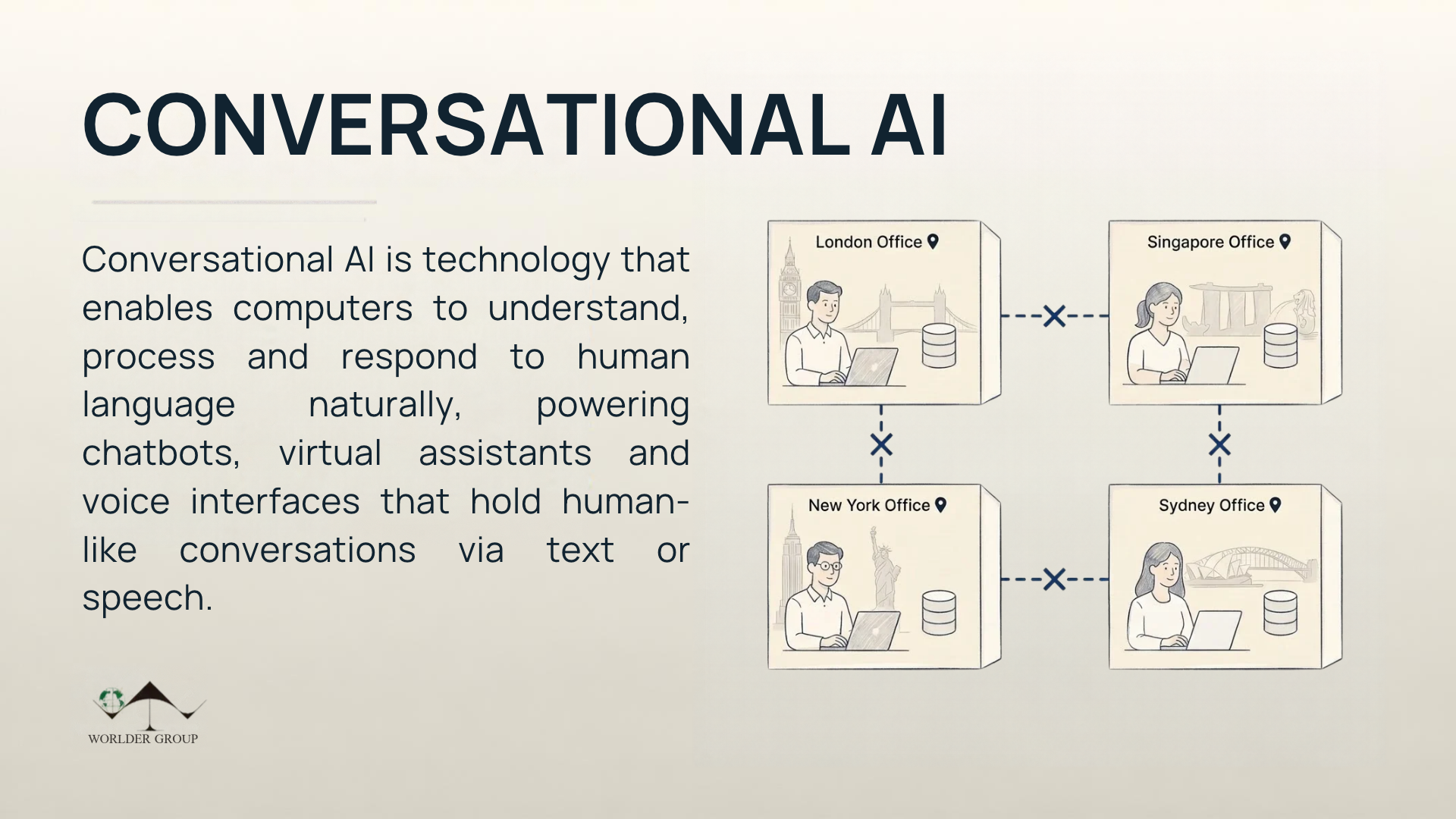
Conversational AI is a technology that enables users to interact with computers in a conversational manner, using natural language processing (NLP) and machine learning to understand and respond to user inputs. It powers chatbots and virtual assistants, providing 24/7 customer support and personalised interactions.
This technology has evolved through contributions from various researchers and companies, with significant advancements made by pioneers like Alan Turing and innovations from organisations such as OpenAI and IBM.
How does Conversational AI work?
Conversational AI works by simulating human-like interactions through several key steps:
1. User Input:
Customers initiate conversations by typing or speaking their queries.
2. Intent Recognition:
The AI analyses the input to identify the user's intent, understanding what they are asking or requesting.
3. Contextual Understanding:
It considers the context of the conversation, including previous interactions and customer details, to tailor responses.
4. Response Generation:
Based on the recognised intent and context, the AI crafts a relevant reply, which can be delivered in text or voice format.
5. Dialog Management:
The system manages the flow of conversation, ensuring coherence and relevance throughout the interaction.
6. Backend Integration:
It may access databases or external systems to retrieve necessary information for accurate responses.
7. Feedback Loop:
The AI learns from interactions, continually improving its performance over time through machine learning techniques.
What are the Benefits of Conversational AI?
1. Improved Customer Satisfaction:
Conversational AI provides instant responses to customer inquiries, significantly reducing wait times and enhancing the overall customer experience. This leads to higher satisfaction and loyalty among customers.
2. Cost Efficiency:
By automating routine tasks and inquiries, Conversational AI reduces the need for extensive human resources, leading to significant savings in operational costs. Businesses can allocate their workforce to more complex tasks, improving productivity.
3. 24/7 Customer Service Availability:
Unlike traditional customer support, which operates within set hours, Conversational AI is available around the clock. This ensures that customer queries are addressed at any time, improving service accessibility.
4. Personalised Interactions:
Conversational AI can analyse customer data and past interactions to deliver tailored responses and recommendations, making customers feel valued and understood.
5. Scalability:
As businesses grow, Conversational AI can easily scale to handle increased customer interactions without the need for proportional increases in staff, allowing for efficient growth management.
What are the Challenges of Conversational AI?
1. Understanding Natural Language:
Conversational AI often struggles with the complexities of human language, including ambiguities, slang and regional dialects. This can lead to misunderstandings and incorrect responses, as the AI may not interpret the intended meaning accurately.
2. Data Privacy and Security:
As Conversational AI systems process vast amounts of sensitive customer data, ensuring data privacy and compliance with regulations like GDPR becomes a significant challenge. Protecting this information from breaches is crucial for maintaining user trust.
3. Integration with Existing Systems:
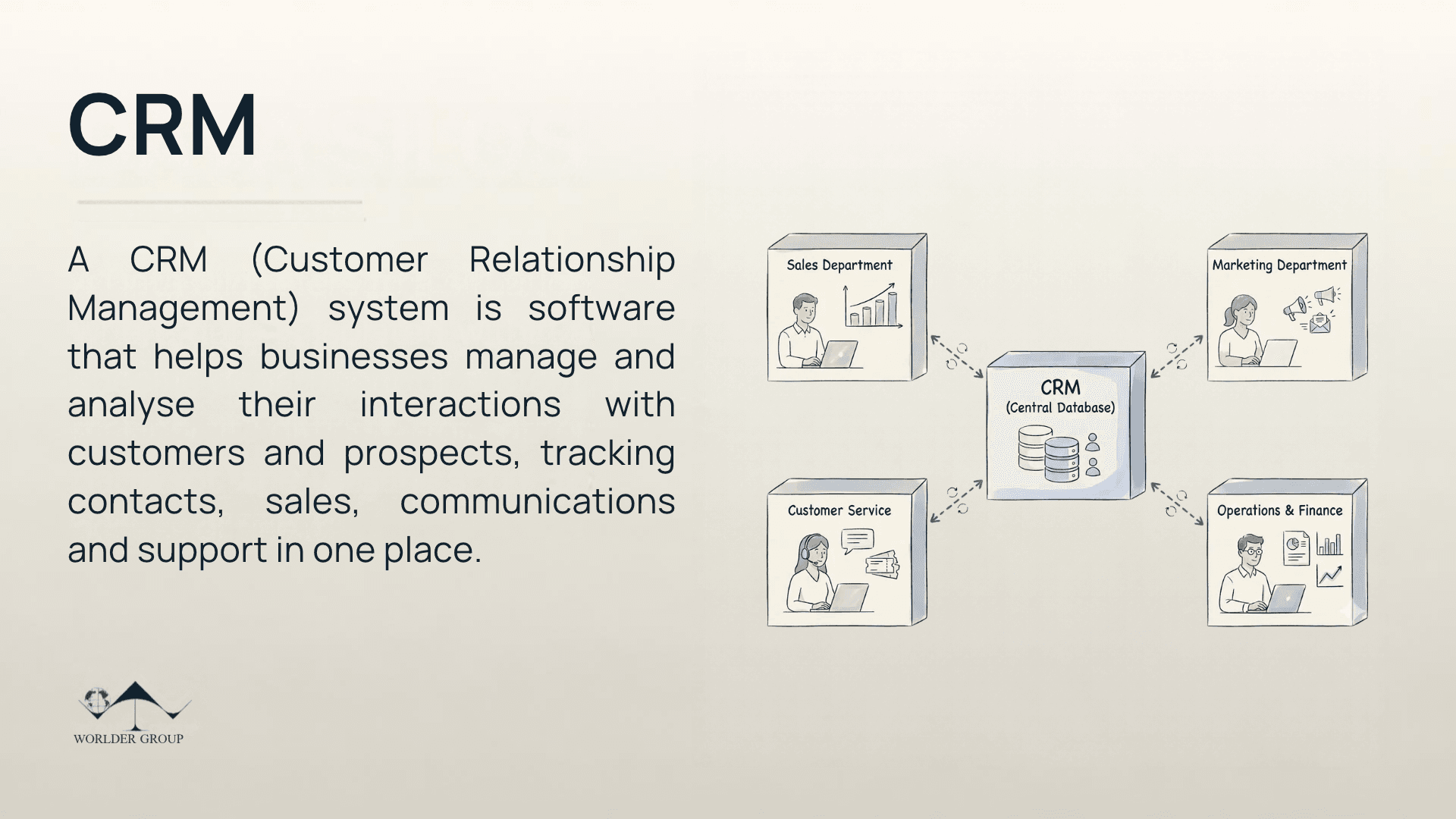
Seamlessly integrating Conversational AI with existing platforms and APIs can be complex. Ensuring smooth communication between various systems while maintaining data consistency poses a significant hurdle for developers.
What are the Best Practices of Implementing Conversational AI?
1. Define Clear Objectives:
Establish specific goals for your Conversational AI implementation, such as improving customer support or automating FAQs. This clarity will guide the development process and help measure success.
2. Understand User Needs:
Conduct thorough research to identify customer preferences, pain points and common queries. This understanding will inform the design of the conversational flows and ensure the AI meets user expectations.
3. Design Engaging Dialogue Flows:
Create intuitive and human-centric conversation paths that guide users effectively. This includes mapping user intents, crafting clear responses and implementing error handling to maintain a smooth interaction.
4. Test and Iterate:
Continuously test the AI across various channels, gather user feedback and refine the system based on performance metrics. This iterative approach ensures that the AI evolves to meet changing user needs.
5. Ensure Seamless Integration:
Choose a suitable deployment infrastructure and ensure that your Conversational AI integrates well with existing systems and platforms. This consistency across channels enhances the user experience.
How Have AI-Driven Operations Transformed Conversational AI?
AI-driven operations have fundamentally reshaped Conversational AI, making it more effective, efficient and adaptable for businesses. Here’s how:
1. Enhanced Language Understanding and Personalisation
AI technologies, especially natural language processing (NLP) and machine learning can now enable Conversational AI to understand and respond to a wide range of customer queries with remarkable accuracy. By analysing vast datasets of customer interactions, these systems deliver highly personalised responses, tailoring conversations to individual needs and preferences. This results in more meaningful and satisfying customer experiences.
2. Improved Predictive and Proactive Engagement
With the integration of predictive analytics, Conversational AI can anticipate customer needs and proactively offer solutions or information. By analysing past interactions and customer data, AI can suggest relevant products or services before the customer even asks, enhancing both engagement and conversion rates.
3. Empowering Human Agents
AI-driven Conversational AI tools now provide real-time insights and recommendations to human agents, enabling them to deliver more personalised and effective support. This shift allows agents to focus on complex, high-value interactions while routine tasks are handled by AI, improving both efficiency and job satisfaction.
Want more insights on AI and improved customer support? Subscribe to our newsletter to get expert tips straight to your inbox!
Read more about how CSF & KPI can help businesses like yours increase efficiency and drive revenue growth.