Most organisations invest heavily in collecting data, from customer behaviour and market trends to operational performance. But what if the real problem is not the lack of data, but rather the way it’s stored and accessed?
Imagine a company where the marketing team has one set of insights, the sales team uses another, and operations rely on completely different metrics. This separation limits collaboration, creates blind spots, and slows down decision-making.
This is where the concept of Data Silos becomes crucial. Data silos can stop your business from reaching its full potential by restricting visibility and efficiency. In this blog, we’ll explore what data silos are, how they work and how businesses can overcome them especially through the use of AI and with better data strategies.
What Are the Key Differences Between Data Silos & Unified Data Architecture?
| Data Silos | Unified Data Architecture |
|---|
| Limited to specific departments or teams. | Shared across the organisation. |
| Slower decision-making due to fragmented data. | Faster with complete data visibility. |
| Teams work in isolation. | Encourages cross-functional teamwork. |
| Inconsistent insights due to incomplete data. | Seamless and consistent from integrated data. |
What Are Data Silos?
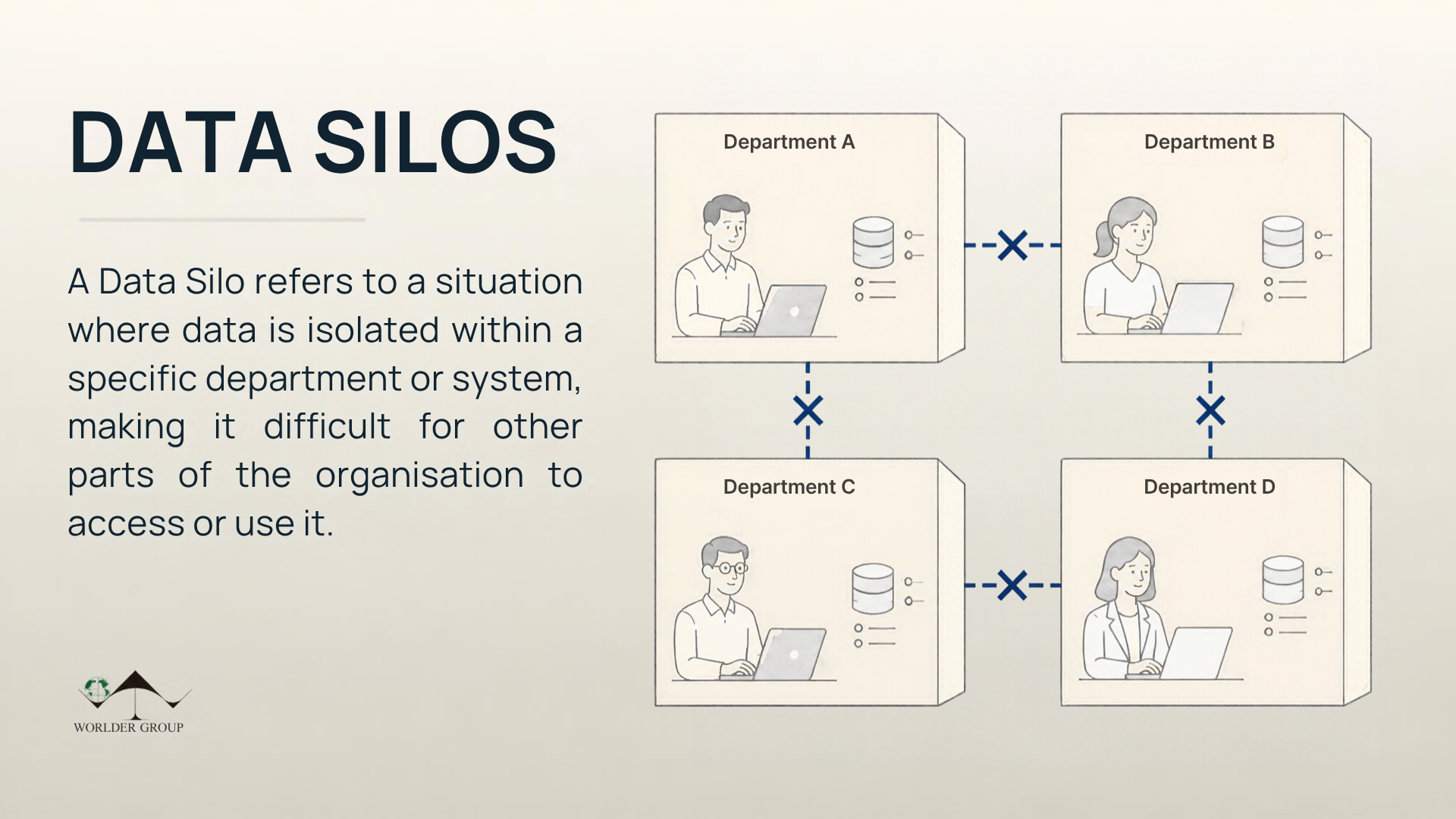
A Data Silo refers to a situation where data is isolated within a specific department or system, making it difficult for other parts of the organisation to access or use it. Each department may collect and store its own data using different tools or formats, but these data sets often remain disconnected.
While this may happen unintentionally as companies grow, it creates inefficiencies and prevents a unified view of business performance.
How Do Data Silos Work?
Data silos typically emerge when:
- Different departments use separate software or tools that don’t integrate.
- Data governance policies limit who can access certain information.
- Teams operate independently with little cross-functional collaboration.
Over time, this leads to data duplication, inconsistent information, and missed opportunities for insight. For instance, if the marketing team doesn’t share customer behaviour data with sales, valuable leads might be missed or poorly handled.
What Are the Benefits of Breaking Down Data Silos?
Here are some of the key benefits organisations gain by eliminating silos:
1. Improved Collaboration
When data flows freely across departments, teams are better equipped to collaborate. For example, marketing can share customer insights with sales, who can then tailor their approach accordingly. This shared visibility promotes a more unified workplace culture, where everyone is working towards the same goals with access to the same information.
2. Better Decision-Making
Without silos, decision-makers have access to a complete, consistent set of data often referred to as a single source of truth. This clarity reduces the risk of making choices based on outdated information. It empowers leadership to act with greater confidence and agility which is especially valuable in fast-moving business environments.
3. Increased Efficiency
Silos often lead to the duplication of effort between different teams storing the same data, manually re-entering information or repeating analyses. When data is unified and centralised, it saves time and resources. Teams can spend less time managing data and more time using it to create value.
4. Improved Customer Experience
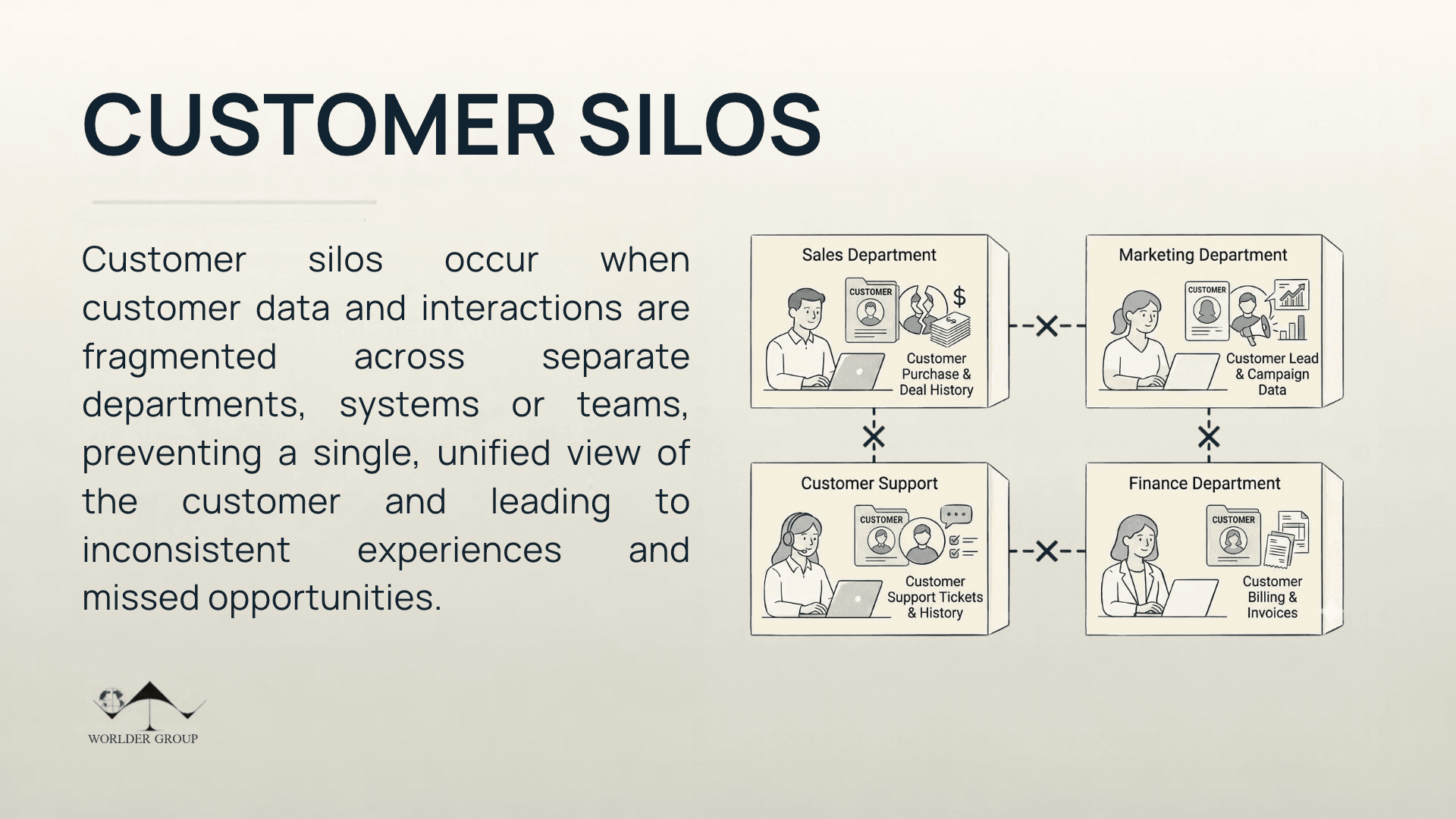
When customer data is siloed, interactions can feel disjointed. A customer might share their preferences with support but have to repeat them to sales. Breaking down silos ensures that every department from marketing to customer service has a complete view of the customer journey. This leads to more personal, timely, and consistent experiences, which strengthens customer trust and loyalty.
What Are the Challenges of Resolving Data Silos?
Here are the key challenges you should be aware of:
1. Legacy Systems
Many organisations still rely on older software or systems that were not designed with modern data integration in mind. These legacy systems often lack the ability to easily connect with newer technologies, creating compatibility issues. As a result, businesses may face costly and time-consuming upgrades or need to build custom connectors to extract and unify data. This can slow down transformation efforts and introduce security concerns if not handled properly.
2. Resistance to Change
Change is rarely welcomed without some level of hesitation, especially when it involves sharing control of sensitive information. Departments may view their data as a form of ownership or competitive advantage internally. This mindset can create resistance, as teams fear loss of autonomy, additional scrutiny or disruption to their established workflows. Overcoming this cultural barrier often requires clear communication, training and visible leadership support.
3. Lack of a Unified Strategy
Without a clear and well-communicated data strategy, efforts to eliminate silos can become fragmented. Different departments might pursue their own integration plans, leading to inconsistent approaches and duplicated efforts. In some cases, data projects stall altogether due to lack of alignment between business goals and technical solutions. A centralised strategy is essential to ensure consistency, avoid redundancies and keep all teams moving in the same direction.
4. Data Quality Issues
When data from multiple silos is finally brought together, it often reveals gaps, duplicates, or inconsistencies. For example, customer information stored in two departments may differ in format, spelling or even accuracy. Cleaning, standardising, and validating this data takes time and effort but it's vital to ensure trustworthy insights. If these quality issues aren’t addressed early, they can undermine the very purpose of integration and lead to poor decision-making down the line.
What Are the Best Practices for Overcoming Data Silos?
Here are some of the best practices organisations can adopt to overcome data silos:
1. Create a Centralised Data Strategy
Start with a clear data strategy that is aligned across the entire organisation. This means involving key stakeholders from different departments like marketing, sales, operations, finance and beyond to agree on shared goals and priorities. The strategy should outline how data is collected, stored, and used, and identify the value it brings to each area of the business.
2. Use Integrated Tools and Platforms
Technology should support, not hinder data sharing. Use software solutions that integrate well with one another to allow seamless data flow between departments. Tools like Customer Data Platforms (CDPs), Enterprise Resource Planning (ERP) systems or cloud-based dashboards can provide a unified view of your data. The goal is to move away from isolated systems and towards platforms that can talk to each other, giving everyone access to the same up-to-date information.
3. Establish Clear Data Governance Rules
Good data governance is about having clear policies for how data is managed. Define who is responsible for each data set, who can access it, and under what circumstances. This reduces confusion and helps maintain data accuracy and security. Data governance rules should also address compliance, especially if you're dealing with sensitive or personal information.
4. Build a Culture of Collaboration
Breaking down data silos is as much about mindset as it is about systems. Encourage teams to see data as a shared resource that benefits the entire organisation, not just their own department. Promote open communication, cross-functional meetings, and shared goals.
How Have AI-Driven Operations Transformed Data Silos?
Here are some of the ways AI is transforming the way organisations manage and eliminate data silos:
1. Holistic Data Integration
AI-powered tools can automatically discover, connect, and merge data from previously isolated sources. Rather than requiring manual coding of connectors, machine learning algorithms identify relationships between diverse datasets, pull them into a unified environment, and harmonise formats. As a result, organisations gain a single, comprehensive view of their information. This becomes an essential step for any AI initiative to perform reliably and without blind spots.
2. Better Data Quality and Consistency
When data lives in silos, errors such as duplicates, inconsistencies or missing values are common. AI-driven cleansing and validation routines scan incoming data for anomalies such as out-of-range values or mismatched customer records and either correct them automatically or flag them for human review. This “garbage in, garbage out” problem is dramatically reduced, ensuring that downstream AI models train on reliable, high-quality datasets.
3. Accelerated Data Velocity
Real-time insights depend on rapid data flows, but silos force teams to wait as data is manually extracted and transported between systems. AI transforms this by applying stream processing and intelligent routing. As soon as new information is generated, AI-driven pipelines detect the change, normalise the record, and update the central store often within seconds. This near-real-time synchronisation empowers AI models to act on the freshest data available, reducing significant delays in critical workflows.
4. Proactive Anomaly Detection and Governance
AI continuously monitors unified data for unusual patterns such as sudden spikes in web traffic, unexpected drops in inventory levels or suspicious login attempts. When anomalies arise, automated alerts notify relevant teams immediately rather than waiting for manual reports. Additionally, AI can enforce governance policies by detecting unauthorised access attempts or flagging personally identifiable information that needs special handling.
Want more insights on Silos and cost optimisation? Subscribe to our newsletter to get expert tips straight to your inbox!
Read more about how Technology Silos and Financial Silos can help businesses like yours increase efficiency and drive revenue growth.