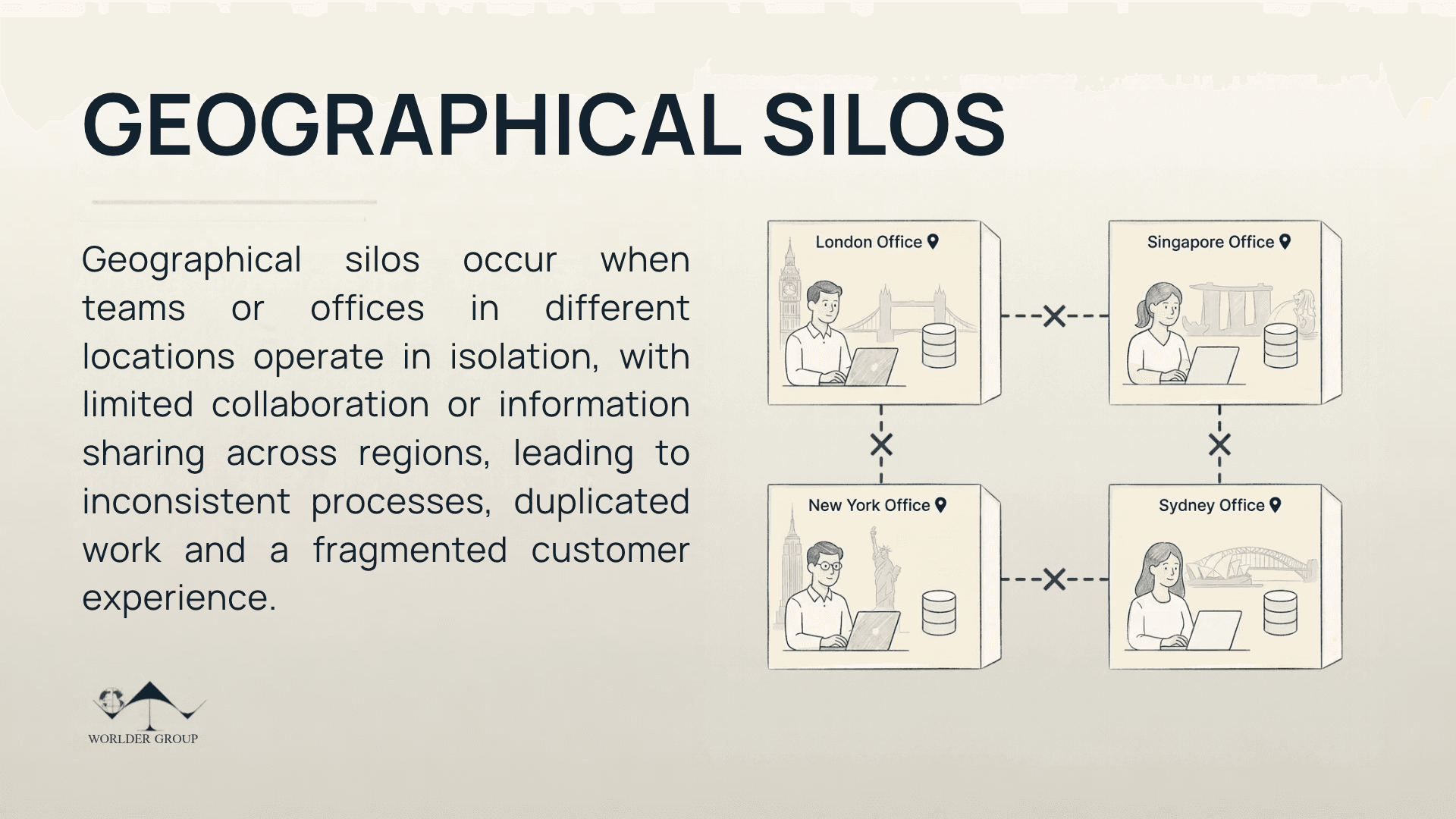
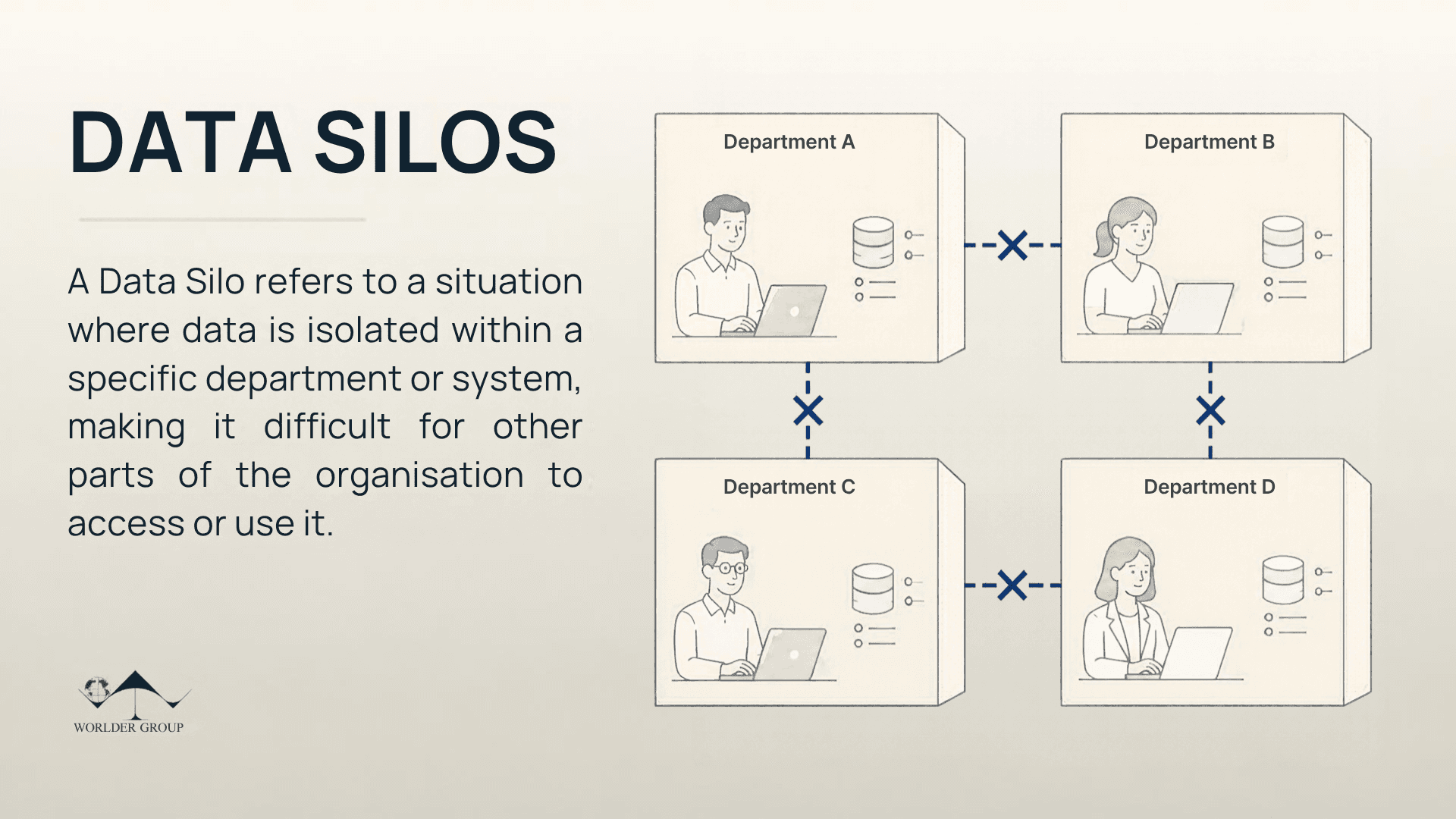
Most businesses are eager to grow by attracting more customers, but growth alone does not always lead to better outcomes. Sometimes, the real challenge lies not in the number of customers but in how businesses understand and serve them.
When teams within an organisation view and manage customers separately, without sharing insights across departments, it can create gaps in service, communication, and decision-making. This often happens when customer information is stored across disconnected tools instead of a shared customer management system such as a CRM. This is where the concept of Customer Silos comes into play.
In this blog, we will explore what Customer Silos are, how they work, and why they matter. You will learn about the benefits they can bring, the challenges businesses face when managing them, best practices to overcome these issues, and how AI-driven operations are transforming customer management today.
What Are the Key Differences Between Customer Silos and Unified Customer View?
| Customer Silos | Unified Customer View |
|---|
| Information about customers is stored separately by each department. | All customer data is collected and shared in a single system. |
| Teams work with their own perspective of the customer. | Teams share a complete, 360-degree view of the customer journey. |
| Strategies are developed individually for sales, marketing, or support. | Strategies are coordinated across departments for consistency. |
| Efficiency exists within departments but can limit collaboration. | Conducive to collaboration is stronger as all teams work from the same insights. |
What Are Customer Silos?
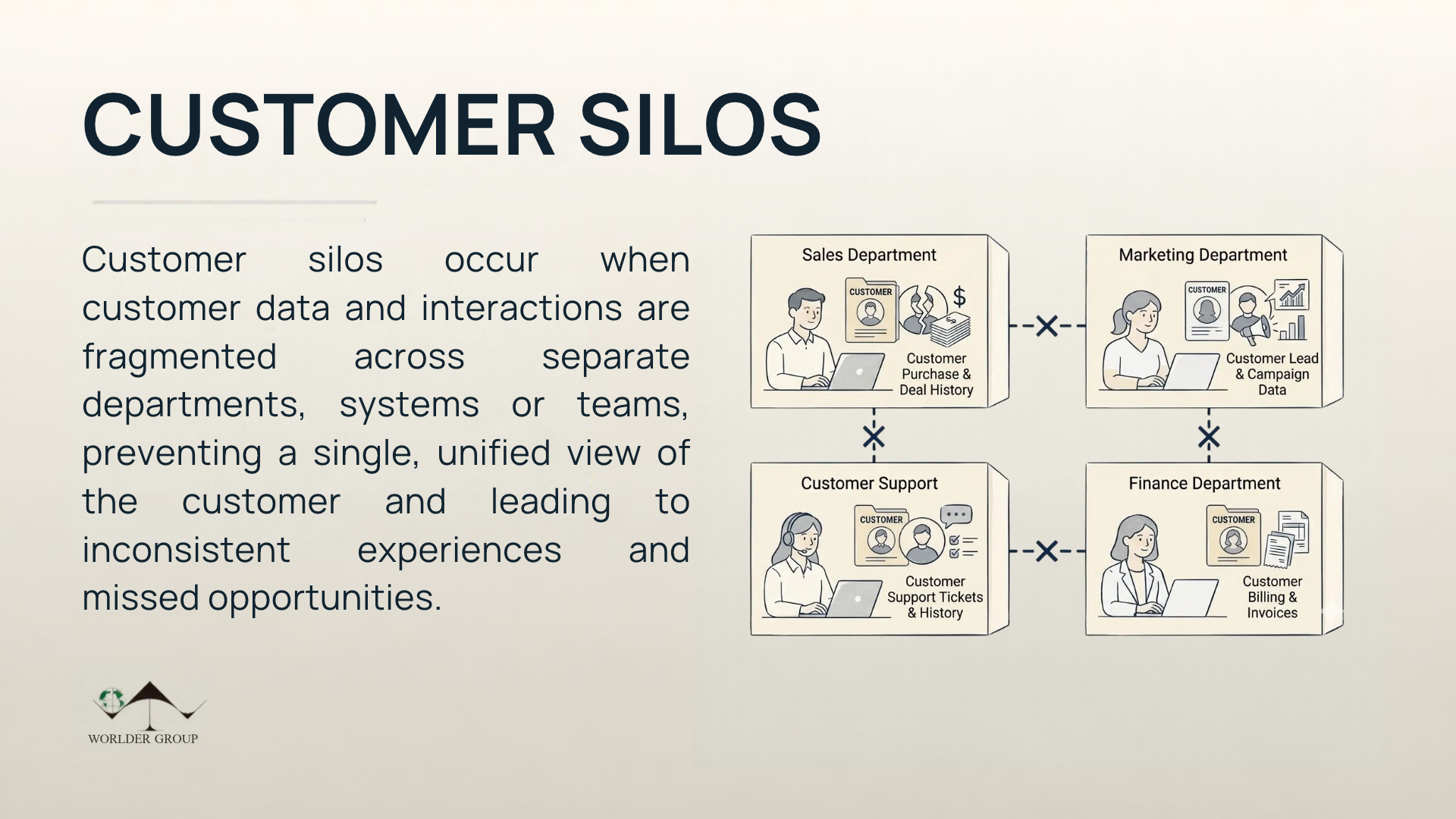
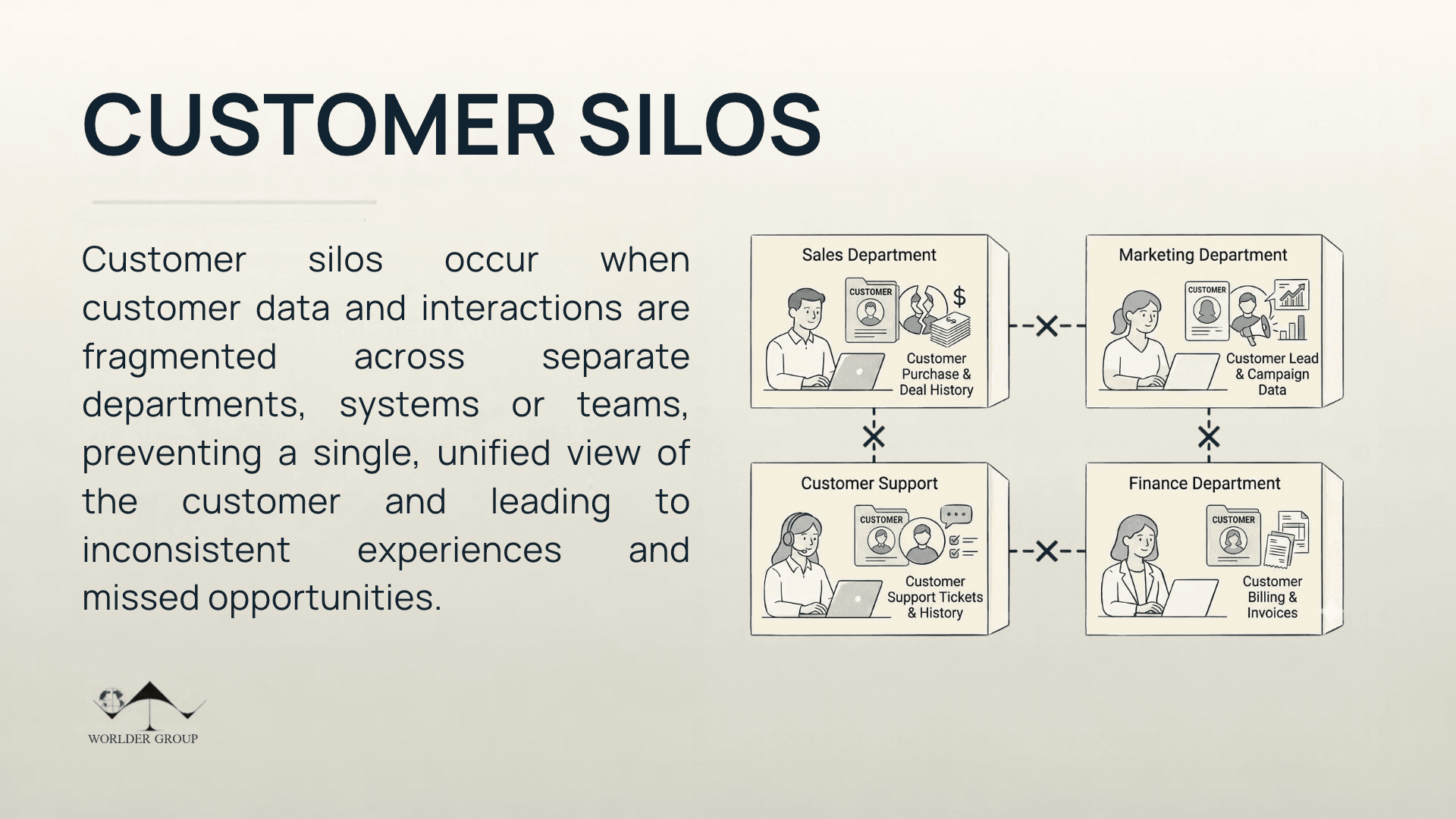
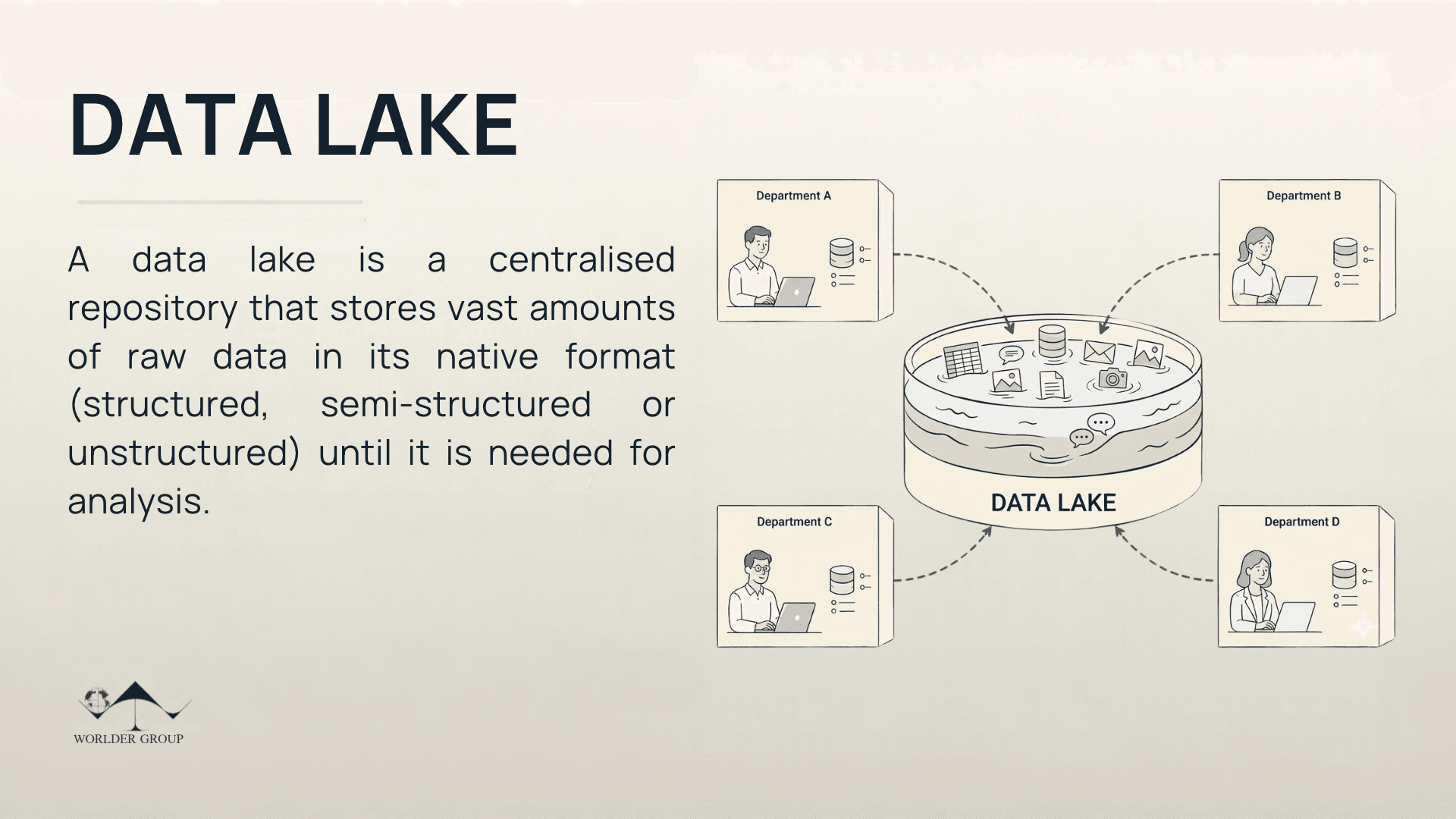
Customer Silos refer to a situation where information and interactions about customers are stored within separate departments or systems, rather than being shared across the organisation. For example, the sales team may have one view of the customer, while marketing or customer support may hold different, disconnected records.
Without a central CRM to bring these views together, each department builds and maintains its own version of the customer.This division means that each department understands customers only from its own perspective, rather than seeing the full picture of who the customer is and what they need.
How Do Customer Silos Work?
Customer Silos form when teams operate independently without a unified system for customer data. Each department builds its own databases, tools, or processes to manage customer relationships.
For example:
- Sales might track customer purchases and contract history.
- Marketing might track engagement with campaigns or website activity.
- Customer support might track service requests and complaints.
While each set of information is valuable, it becomes siloed when it is not connected or visible across teams. In the absence of a shared CRM, these insights remain fragmented, resulting in departments working with incomplete knowledge. This limits their ability to deliver seamless and consistent customer experiences.
What Are the Benefits of Customer Silos?
Although silos are often seen as barriers, they can also bring certain advantages if managed wisely:
Variety of
1. Perspectives
Each department brings its own unique perspective when handling customers. Sales might focus on conversion, marketing on engagement, and support on satisfaction. This variety ensures that customer needs are approached from multiple angles, enriching the overall service strategy.
2. Clear Ownership
Silos help establish clear accountability. For example, the sales team takes ownership of customer acquisition, while support owns after-sales care. When supported by a CRM, this ownership can be clearly tracked as customers move between teams, ensuring continuity without confusion.
3. Specialisation and Expertise
Customer Silos allow teams to concentrate on their specialised skills. A marketing team can fully devote itself to campaigns, while customer service can focus on resolving issues efficiently. This level of expertise often leads to higher quality outcomes in each function.
4. Efficiency Within Functions
By working within their own systems, departments can create streamlined workflows. However, these efficiencies are strongest when customer data is later connected through a CRM rather than remaining isolated.
What Are the Challenges of Customer Silos?
On the other hand, Customer Silos can present challenges when left unmanaged. These challenges are not inherently negative, but they highlight the limitations of a siloed approach:
1. Short-Sightedness
When departments only focus on their own goals, they may miss the bigger picture of customer experience. For example, sales might celebrate a closed deal without realising that the customer had unresolved issues with support.
2. Self-Centred Goals
Silos can sometimes encourage departments to prioritise their own success metrics, such as campaign clicks or sales numbers, over shared business outcomes. This can reduce alignment across teams.
3. Limited Accessibility
Information stored within one team’s system may not be easily accessible to others. Without a shared CRM, teams often rely on manual handovers or repeated customer questions, leading to frustration for both employees and customers.
4. Operational Inefficiency
While silos can improve speed within departments, they can also cause duplication of records, repeated outreach, and wasted effort. These inefficiencies are common when customer data is not synchronised through a central CRM.
What Are the Best Practices to Solve Customer Silos?
Here are four best practices that help turn silos into opportunities for stronger customer relationships:
1. Broaden Perspectives
Businesses should encourage an outside-in mindset by sharing customer stories, feedback, and experiences across teams. CRM dashboards and shared customer histories can help teams see how their work impacts the wider journey.
2. Expand Motivations
People are more engaged when they clearly see the benefits of change. To manage silos well, businesses need to explain how customer-focused improvements support everyone, from protecting revenue to freeing resources for more meaningful projects. Using customer experience data alongside business metrics helps show employees the impact of their work, making it easier to put customer interests at the centre.
3. Nurture Collaboration
Silos become less limiting when teams are motivated to work together. This can be encouraged by rewarding departments that prevent issues for customers, celebrating successful cross-functional projects, and increasing transparency about both challenges and wins. Creating regular opportunities for teams to share knowledge helps address root causes of customer pain points instead of only fixing problems after they arise.
4. Build-In Universality
When starting any new project or process, businesses should consider how it can serve multiple teams and create seamless experiences for customers. A CRM designed for shared use allows multiple teams to access the same customer information while maintaining accountability, supporting transparency and flexibility across the organisation.
How Have AI-Driven Operations Transformed Customer Silos?
Artificial Intelligence (AI) is reshaping how businesses handle Customer Silos by breaking down barriers between teams and enabling smarter decisions:
1. Unified Insights Across Teams
AI can gather information from multiple systems like sales records, marketing campaigns, and customer support logs and bring them together in one place. When applied to CRM data, this creates a single, reliable view of each customer that all teams can use.
2. Predictive Analysis for Smarter Decisions
With the ability to connect siloed data, AI can identify patterns and trends that humans might miss. For example, it can forecast what products a customer is likely to buy next or which clients may need extra support. These predictions help businesses act in advance, offering solutions before customers even ask.
3. Automation of Repetitive Processes
One of the strengths of AI is its ability to handle routine tasks, such as updating records, removing duplicates, or ensuring consistent information across departments. By reducing manual effort, AI not only saves time but also improves accuracy, allowing employees to focus on higher-value work like strategy and customer engagement.
4. Enhanced Customer Experience Through Personalisation
With insights from AI, businesses can provide more tailored and timely services. For instance, marketing can send relevant offers based on past behaviour, and customer support can respond with solutions that match the customer’s history. This level of personalisation makes customers feel recognised and valued, leading to stronger relationships and satisfaction.
Want more insights on RevOps and cost optimisation? Subscribe to our newsletter to get expert tips straight to your inbox!
Read more about how Organisational Silos and Supply Chain Silos can help businesses like yours increase efficiency and drive revenue growth.