Is Your Website Content Holding Back Your Growth?
In today’s digital-first world, businesses are under pressure to deliver fast, consistent and personalised content across multiple channels namely websites, mobile apps, smart devices and even digital kiosks. But many traditional Content Management Systems (CMS) are not built to keep up. They slow down development, limit flexibility and require repeated work for each new platform.
This is where a Headless CMS becomes essential. For businesses operating at scale or implementing BigOps strategies, agility and speed in content delivery are crucial. A Headless CMS supports this need by decoupling the back end (where content is created) from the front end (where content is displayed). This results in faster updates, more control and a seamless experience across platforms.
In this blog, you’ll learn what a Headless CMS is, how it works and how it can help your business scale content delivery without sacrificing performance or quality. We’ll also explore its benefits, best practices and how AI is transforming the way businesses manage digital experiences.
What Are the Key Differences Between Headless CMS and Traditional CMS?
| Headless CMS | Traditional CMS |
|---|
| Content is separated from design, allowing more control over how it’s displayed. | Content and design are built together, limiting flexibility in presentation. |
| Developers can use any tools or frameworks to build front-ends. | Users must work within built-in templates and design tools. |
| Enables publishing across websites, mobile apps, IoT and more. | Primarily focused on delivering content to a single website. |
| Great for large-scale operations that need speed, scale and flexibility. | Best suited for simpler, smaller websites with limited customisation needs. |
What Is a Headless CMS?
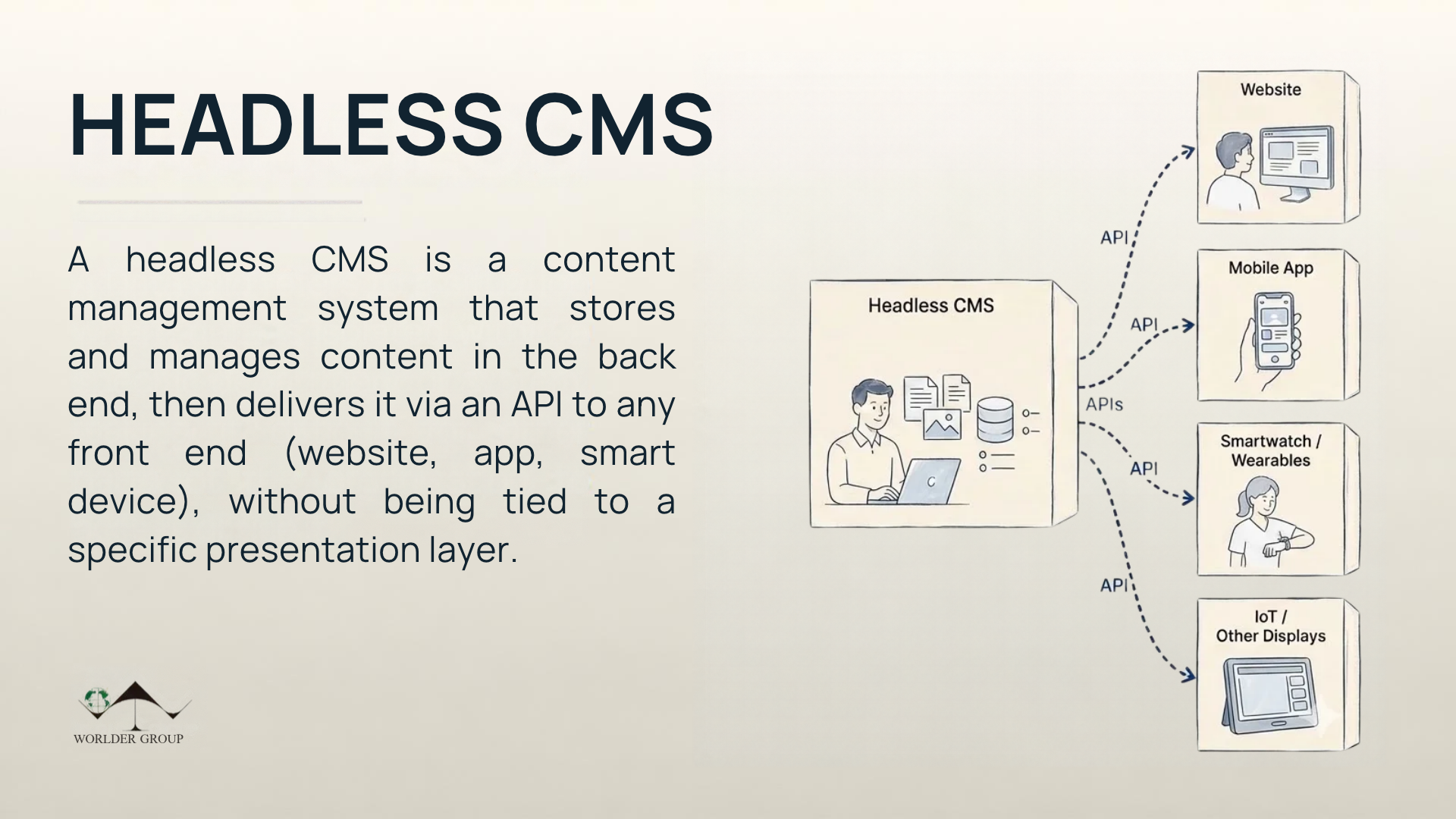
A Headless Content Management System (CMS) is a content platform that manages and stores content without being tied to a specific way of displaying it. Unlike traditional CMSs (like WordPress or Drupal), which combine both content creation and display in one system, a headless CMS delivers content through an API to any front-end you can choose such as websites, mobile apps or even wearable devices.
The “head” refers to the front-end (how content is presented) and “headless” means this part is removed. It gives developers and marketers the freedom to display content anywhere, in any format.
How Does a Headless CMS Work?
At its core, a Headless CMS stores all your digital content like text, images, videos and more in one central place, like a digital library. But instead of tying this content to a fixed design or layout, it delivers the content through APIs (Application Programming Interfaces) to any platform that needs it. This gives you full freedom over how and where your content is displayed.
Here’s a step-by-step breakdown:
1. Content Creation
Teams create content using a user-friendly back-end interface, just like they would in a traditional CMS. The key difference is that they focus purely on the message and structure, not how it looks on a webpage. This separation means content creators and developers can work independently without stepping on each other’s toes.
2. Content Delivery via APIs
Once the content is ready, APIs come into play. These are the digital messengers that send your content to the platforms where it's needed such as a website, a mobile app, a smartwatch or even a voice assistant. APIs ensure that the content arrives in real-time and in a format that each platform understands.
3. Multi-Channel Publishing
Because your content lives separately from how it’s presented, you can reuse it across different channels. For example, the same product description can appear on your website, your eCommerce app, your chatbot and your digital kiosk, without needing to rewrite or reformat it each time.
4. Front-End Flexibility
Developers can design unique, responsive and high-performance front ends using modern tools and frameworks. They are not locked into a rigid template provided by a traditional CMS. This means your brand can deliver richer, faster and more engaging digital experiences that align with your users’ expectations.
What Are the Benefits of a Headless CMS?
A Headless CMS unlocks a range of benefits, especially for growing businesses managing content across multiple platforms:
1. Flexibility and Speed
Developers have the freedom to build front-end experiences using any technology or framework they prefer. This independence speeds up development and avoids the restrictions of traditional CMS platforms.
2. Omnichannel Content Delivery
You can create content once and push it across multiple platforms such as websites, mobile apps, digital kiosks, smart devices, etc., This reduces duplication of effort and keeps your messaging consistent everywhere.
3. Improved Performance
Since content is delivered via APIs and does not depend on a heavy, all-in-one system, websites and apps load faster and run more smoothly. This is especially helpful when you have high traffic or global reach.
4. Scalability for BigOps
Headless CMSs are ideal for large teams operating at scale. Whether you are managing content for multiple regions or rolling out campaigns across different platforms, the system keeps everything organised and efficient.
What Are the Challenges of Implementing a Headless CMS?
Like any shift in technology, adopting a Headless CMS comes with its own set of hurdles:
1. Learning Curve
For non-technical users, the idea of separating content from design might feel unfamiliar. It may take some time to adjust, especially if you're used to editing everything in one place.
2. Front-End Responsibility
Because the CMS does not handle design or layout, you’ll need developers to build and maintain the front-end interface. This adds a layer of technical work to the process.
3. Cost
The initial setup of building custom front ends and integrating with existing systems can require a significant investment in time and resources.
4. Tool Integration
Connecting the Headless CMS to other tools (like analytics platforms, CRMs or eCommerce systems) may require extra technical effort, depending on your existing tech stack.
What Are the Best Practices for Implementing a Headless CMS?
To make the most of your Headless CMS investment, it helps to follow a few smart strategies:
1. Define Clear Objectives
Before starting, know exactly what you are hoping to achieve, whether it’s faster publishing, managing content across different platforms or improving user experience.
2. Involve All Teams Early
Bring in marketing, design and IT teams from the beginning. This ensures that the system supports all their needs and reduces miscommunication later.
3. Invest in Developer Resources
Since you will need to build the front-end separately, make sure you have access to developers with the right skills and availability.
4. Choose Scalable Technology
Pick a Headless CMS that not only works well with your current tools but can also grow with your business needs over time.
5. Focus on Content Structure
Organise your content into reusable, well-defined formats. This will save time in the long run and make it easier to publish across different platforms.
How Have AI-Driven Operations Transformed Headless CMS?
Here are some of the key ways AI-driven operations are reshaping Headless CMS platforms:
1. Intelligent Content Creation and Automation
AI enhances the Headless CMS by automating time-consuming content tasks such as drafting, tagging and SEO optimisation. Natural Language Processing (NLP) models can generate first drafts of content based on user data, suggest headlines and optimise metadata for search visibility. This streamlines production and allows teams to focus more on strategy and refinement.
2. Personalised Content Delivery at Scale
AI systems analyse user behaviour such as browsing history, device usage and interaction patterns to deliver tailored content in real time. Whether on mobile, desktop or voice interfaces, AI ensures the most relevant content reaches the right user at the right moment. This results in more engaging and targeted digital experiences across channels.
3. Seamless Multi-Channel Publishing
With AI-driven automation, Headless CMS platforms can adapt content layouts, images and formats for various devices and platforms. This ensures consistency while optimising for different screen sizes or interfaces. Businesses can publish content across websites, apps and social media with minimal manual adjustments, maintaining quality and efficiency.
4. Predictive Insights and Real-Time Optimisation
AI tools within Headless CMS platforms track performance metrics such as click-through rates, engagement levels and bounce rates in real time. These insights help teams adjust their strategies quickly. Additionally, AI can predict future content trends and user preferences, enabling data-informed planning and proactive content development.
Want more insights on RevOps and cost optimisation? Subscribe to our newsletter to get expert tips straight to your inbox!
Read more about how CMS and Data Warehouse can help businesses like yours increase efficiency and drive revenue growth.