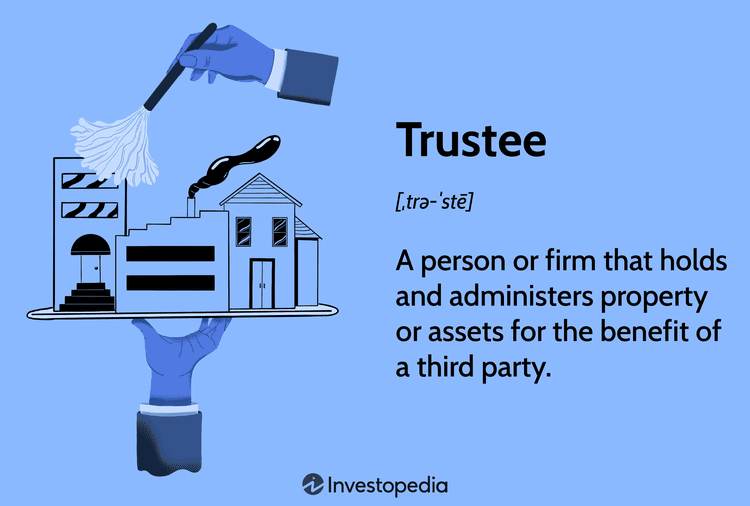
What Is a Trustee?
A trustee manages and distributes assets held in a trust according to the grantor’s wishes. Trustees oversee many types of trusts, including those for minors, families, charities, and retirement plans, and ensure the assets are managed responsibly. They also have a fiduciary duty, which means they must act in the trust’s beneficiaries’ best interests.
How Trustees Operate
A trustee is a person or organization that has been designated as trustee by the trust grantor (or trustor) and that holds the legal title to an asset or group of assets in the trust.
A trustee is granted this legal title through the trust document. The people or entities who benefit from the trust are called beneficiaries.
1
Definition of a Trust
A trust is a legal entity created by a grantor. It holds certain assets that the grantor transfers to it. The trust document gives the assigned trustee title to those assets or property once the grantor dies and instructions for what to do with them.
For example, a trust might be created to provide legal protection for the grantor’s assets and ensure they are distributed according to the terms of the trust after the grantor’s death. The trustee is charged with ensuring that the grantor’s wishes are fulfilled.
A trustee is thus responsible for properly managing all property and other assets placed in the trust for the beneficiaries.
A trustee’s specific duties are unique to the trust agreement and are dictated by the type of assets held in the trust.
For instance, if a trust holds various rental properties intended to be used for income, it will be the trustee’s duty to ensure those those properties are managed, maintained, occupied, and generating income.

Trustees are also required to financially manage and oversee accounts within a trust when it is made up of other investments, such as equities in a brokerage account.
Trustee Responsibilities
All trustees have general guidelines to follow and responsibilities, regardless of the specifics in the trust agreement. Trustees generally assume the following duties:
- Act as a fiduciary:Ensure the trust is administered according to the grantor’s wishes and in the best interest of the beneficiaries.
- Ensure the safety of the assets: Account for the funds and assets within the trust and understand who the beneficiaries are and what their rights are. Ensure trust assets are kept separate from other assets.
- Administer the trust: Keep records of all transactions and distribute assets as required.
File reports: Report to state and federal regulators as required, and keep the beneficiaries updated.
- Make decisions: Make decisions about the assets as circumstances change, always in alignment with the grantor’s wishes.
- Invest: Invest, allocate, or adjust assets as needed according to the wishes of the grantor.
Communicate with beneficiaries: Initiate communication with the beneficiaries via emails, phone calls, or other methods of contact. Ensure beneficiaries clearly understand the grantor’s wishes for the trust and be prepared to answer questions.
Different Types of Trustees
If you are selecting a trustee, you can choose someone you know. It might be best, however, to find someone with experience.
A trustee should understand the trust being set up and know what their responsibilities are.
For example, if the trust includes assets intended for your family’s future generations, you’d want to appoint someone who understands how to manage wealth for capital appreciation as well as income.
There are generally three types of trustees:
- **Individual: **Friends or family members the grantor believes can administer the trust’s assets properly.
- **Independent: **Businesses (not financial institutions) that specialize in trust management. You’ll find investment advisors, accountants, and administrators at these private businesses. Many have names like XYZ Trust Company or ABC Wealth and Trust.
- **Institutional: **Many large financial institutions have trust professionals that administer, invest, and manage trusts for their clients.
Comparing Trustees and Executors
A trustee administers, manages, and distributes the assets in a trust after the grantor dies.
An executor administers and manages the estate of someone who has died, and distributes the assets left to heirs through a will.
An individual can name one person for each role or could appoint one to perform both roles.
Like a trustee, an executor can be a trust company, a bank, a trusted friend, or a family member.